The Hidden Dangers in Smart Lighting
As a contractor, the smart lighting you install can be a gateway for cyberattacks, data breaches, and significant legal liability.
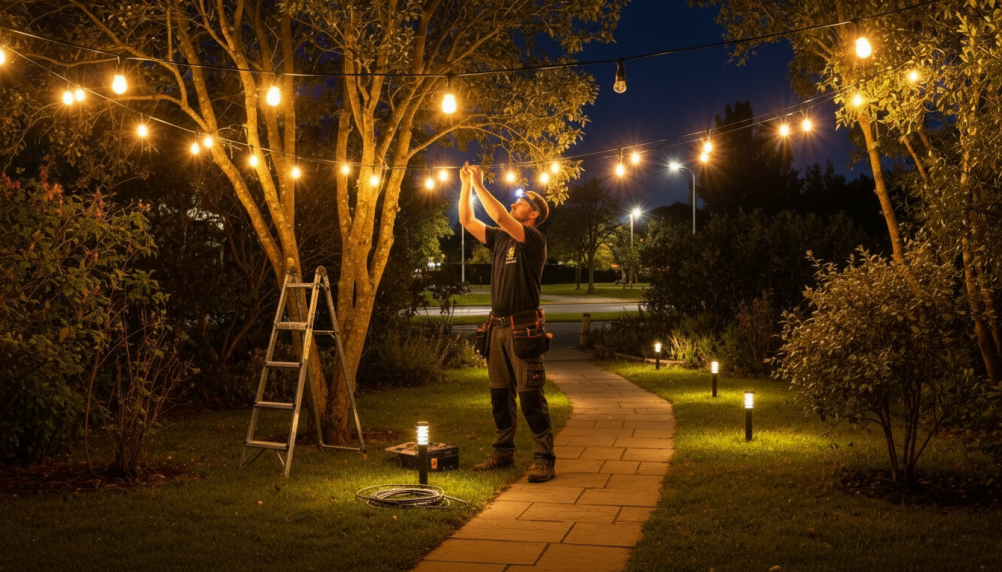
The widespread adoption of outdoor lighting systems is heavily reliant on local contractors, who serve as the primary channel for both sales and installation. Contractors are positioned as trusted advisors, guiding clients through product selection and ensuring proper implementation. However, many are not adequately informed about the intricate cybersecurity, data privacy, and geopolitical risks associated with certain smart lighting products. This lack of awareness can lead to a situation where these trusted advisors inadvertently become conduits for significant cybersecurity and legal risks. By installing systems with inherent vulnerabilities, contractors may unknowingly compromise their clients' security and, in turn, expose their own businesses to substantial legal and reputational repercussions.
The Invisible Threat with Key Vulnerabilities
Key Vulnerabilities
- ⚠️Unencrypted Traffic: Sensitive data like Wi-Fi passwords can be easily intercepted.
- ⚠️Weak Passwords: Default, easily guessable credentials offer an open door to hackers.
- ⚠️No Updates: A lack of security patches leaves devices permanently vulnerable to known attacks.
Consider this: when your client sets up their new smart lights, the accompanying app often requires access to their Wi-Fi credentials. This sensitive information, along with usage patterns, device identifiers, and even precise location data, can be collected by the app.
The critical issue is where this data goes. Many Chinese-developed apps, like those from Tuya Smart Inc., explicitly state they operate data centers in China. Others, while less transparent, are developed by Chinese entities, implying their data is subject to Chinese jurisdiction.
This isn't just a privacy concern; it's a national security imperative. China’s National Intelligence Law (NIL), Cybersecurity Law (CSL), and Data Security Law (DSL) legally compel Chinese companies to "support, assist, and cooperate with national intelligence efforts". This means any data these companies collect, regardless of where the user is located, can be legally demanded by the Chinese government.
App Risk Dashboard
We analyzed popular smart lighting apps. Use the search below to filter by app or developer and click the info icon for a detailed risk breakdown.
| SN | App/ Company Name | App Store Link | Developer / Identified Server Location | Notes/Red Flags | Hacking and Security Issues | Sources | Actual/Implied Data Collection (Policy/User Review) | Actual/Implied Data Sharing (Policy/Legal Context) |
|---|---|---|---|---|---|---|---|---|
| 1 | Govee Home | Google App | Shenzhen Intellirocks Tech Co. Ltd. / China | A known vulnerability (CVE-2023-3612) was found in the app, allowing for potential malicious JavaScript execution and data theft. Data safety" section states the app may collect personal info. | Known vulnerability: The identified vulnerability (CVE-2023-3612) could allow for a cross-site scripting (XSS) attack, enabling remote code execution and potential data exfiltration. Data transmission risk: The collection of "video and audio signals" combined with vague server location creates a risk of sensitive personal data being intercepted or stored in a jurisdiction with less stringent privacy laws. | 1. NVD - CVE-2023-3612, 2. CERT Polska - CVE-2023-4617 |
The privacy policy confirms collection of name, email, device name, WiFi information, and images. It notes that "video and audio signals" are collected for some devices. The Google Play "Data safety" section states the app may collect "Personal info, App activity" and other data. | The privacy policy states Govee may "share information with third parties who provide services for Govee customers." |
| 2 | HappyLighting | Google App | Shenzhen Qianghe Technology Co., Ltd. / China | The "no data collected" claim on the app store vs asking for the microphone and user data while usage for its functionality is a major red flag. This indicates a significant lack of transparency. Vulnerable to Man-in-the-middle (MitM) attacks. | Lack of transparency: The direct contradiction between the app store claim and the privacy policy suggests a high-risk security posture, making it difficult for users to understand what data is truly at risk. Man-in-the-middle (MitM) attacks: Vague data sharing and server policies increase the risk of data being intercepted during transmission, especially if encryption is not end-to-end. | 1. HappyLighting Privacy Policy, 2. Guardsquare on Security Implications of App Permissions |
The privacy policy directly contradicts this, stating the app requests permissions for location, Bluetooth, and the microphone for its functionality. It claims it will only collect data when a user "actively" uses a feature. | The privacy policy is vague on data sharing. Given its Chinese origin, data is subject to Chinese laws. |
| 3 | Magic-LED / Magic Light | Google App | Zengge (Shenzhen Zengge Technology Co., Ltd.) / China | A user review notes the app is "very dated," which suggests a lack of ongoing support and potential for security vulnerabilities. The lack of data encryption is a critical security flaw. | Lack of encryption: The explicit admission that "Data isn't encrypted" is a critical security failure, leaving all collected data (including personal info and location) completely exposed to any attacker who can intercept the traffic. Outdated software: The "very dated" nature of the app implies a lack of security patches, making it highly susceptible to known, unpatched vulnerabilities. | 1. Magic Home Pro Google Play Store Data Safety Section (Zengge’s related app), 2. Android Developers on Cleartext Communications |
The privacy policy for related apps from Zengge (like Magic Home Pro) reveals collection of personal info, app activity, location, and photos. It also explicitly states "Data isn't encrypted." | The privacy policy is vague. However, the app developer is the same as OmniRGB and Surplife, which makes the "no sharing" claim highly questionable. Given its Chinese origin, data is subject to Chinese laws. |
| 4 | OmniRGB | Google App | Zengge (Shenzhen Zengge Technology Co., Ltd.) / China | The app store claims are a direct contradiction to its own data safety section. The fact that this app is a rebranded version of another Zengge app makes its data privacy practices even more dubious. It may collect personal info, videos, pictures, etc. | Misleading claims: The direct contradiction between the developer’s claim and the app store’s data safety section is a significant red flag, indicating a lack of trustworthiness and a high likelihood of undisclosed security risks. Supply chain risk: As a product from a Chinese developer, the app is subject to Chinese national security laws, which could compel the developer to provide data to the government, regardless of the user’s country of origin. | 1.Medium 2.Reddit |
The Google Play data safety section for this app explicitly states it may collect "Location," "Personal info," "Photos and videos," and "App activity." This directly contradicts the "no data collected" claim. | The privacy policy for Zengge’s apps is vague on this, but its data collection practices are extensive. Given its Chinese origin, data is subject to Chinese laws. |
| 5 | Sengled Home | Google App | Sengled Optoelectronics Co., Ltd. / China | This app is more transparent than most but still has a vague server location policy and extensive data collection for a lighting app. | Over-collection of data: The collection of extensive data, including video and audio signals for certain products, creates a large attack surface. A breach of this data could lead to serious privacy violations and potential blackmail. Third-party risk: Sharing data with "third parties" introduces a supply chain risk, as a breach at one of these partners could expose the user’s data without their knowledge. | 1. WinBuzzer on Amazon dumping Sengled Alexa Skill, 2. StatusGator on Sengled outages 3.Reddit |
The privacy policy is very detailed, confirming the collection of name, email, WiFi information, and for certain products like Sengled Snap, video and audio signals. The "Data safety" section states the app collects "Personal info," "App activity," and "Device or other IDs." | The privacy policy states Sengled "may share information with third parties who provide services for Sengled customers" and that it may share data with a "3rd-party platform with your permission." |
| 6 | Smart Life / Tuya Smart | Google App | Tuya Smart Inc. / China | Tuya is a massive IoT platform used by many other brands, meaning the risks are widespread. Its explicit mention of a Chinese data center and mandatory data sharing with "group companies" is a major security risk. | Centralized data risk: As a massive IoT platform, a single breach of Tuya's centralized data centers in China could expose the data of millions of users from various brands. Mandatory sharing: The policy of sharing data with "group companies" and unspecified "third-party service providers" and the explicit mention of a data center in Shanghai, China, makes user data subject to the jurisdiction of Chinese security laws and government access. | 1. Tuya Developer – Security Test Documentation, 2. SmartLife Privacy Policy |
The privacy policy is one of the most explicit, confirming collection of extensive data, including your device model, IP address, geographical location, and even data from smart body fat calculators. The app store states this app "may share" data with third parties. The "Data safety" section states the app collects "Location," "Personal info," "Photos and videos," "App activity" and "Device or other IDs." | The policy states that data may be disclosed to "other Smart Life group companies" and "third-party service providers." Given its Chinese origin, data is subject to Chinese laws. The privacy policy explicitly mentions a data center in Shanghai, China. |
| 7 | Surplife | Google App | Zengge (Shenzhen Zengge Technology Co., Ltd.) / China | This is another Zengge app with the same critical red flag: Personal info," and "Photos and videos,". This indicates a high degree of opaqueness. | Deceptive practices: The app’s contradictory claims and vague privacy policies are typical of a low-security posture. The app likely lacks robust security features, making it an easy target for attackers seeking to exploit user data or gain a foothold on the home network. | 1. Surplife Google Play Data Safety Section | The Google Play "Data safety" section for the app lists collection of "Location," "Personal info," and "Photos and videos," directly contradicting its own "no data collected" claim. | The privacy policy for Zengge is vague. Given its Chinese origin, data is subject to Chinese laws. |
| 8 | Trimlight Edge | Google App | Shenzhen Sperll Technology Co., Ltd. / China | As with other apps on this list, the "no data collected" claim is a significant red flag that directly conflicts with the app’s function. The lack of a clear privacy policy for the app itself is a major security and liability concern. | Insecure communication: The likely communication between the app and the device is unencrypted. This makes the app and the device vulnerable to MitM attacks, where an attacker can intercept or alter commands or steal data. Lack of security updates: The absence of a clear privacy policy and a misleading "no data collected" claim suggests the developer does not prioritise security, likely meaning there are no regular security patches or updates for the app. | 1. Trimlight Edge Google Play Store Description, 2. Trimlight DFW Troubleshooting Guide 3. Google App |
The app’s core functionality requires it to communicate with the lights and store user-created patterns, making the "no data collected" claim highly dubious. The developer is a Chinese company. | The privacy policy found for the company focuses on website data, not app data. Given its Chinese origin, data is subject to Chinese laws. |
| 9 | Trimlight | Apple App | Shenzhen Sperll Optoelectronic Technology Co., Ltd. / China (Shenzhen) | Inconsistent privacy declarations across apps from same developer. Developer based in China. | Inconsistent policies: The varied and often contradictory privacy claims across the developer’s different apps create a confusing and insecure user environment. This makes it impossible for users to make an informed decision about their data’s safety. Physical security risks: With the developer’s address in Shenzhen, China, there is a risk that data is not only stored in China but is also subject to physical access by unauthorized parties. | 1. Apple App Store Privacy Practices for Trimlight, 2. Trimlight Eastern Washington Privacy Policy (as an example of the brand’s practices) |
Inconsistent across related apps: "No data collected" (BanlanX) vs. "Contact Info, Identifiers" (FairyNest) | Servers are in Shenzhen, China (Production/Business Address). Given its Chinese origin, data is subject to Chinese laws. |
| 10 | Pixel Dancer (Rainmin Illumination) | Apple App | 小艳 刘 China (Dongguan) | Insecure handling of Wi-Fi credentials (cleartext storage on the device), making users and businesses easily vulnerable to serious malicious attacks. Explicit "no data collected" claim contradicts the basis. App seems to have an individual developer that puts users and businesses at a hightened risks. | "Cleartext credentials: Storing Wi-Fi credentials in cleartext on the device is a catastrophic security flaw. If an attacker gains physical access to the device or can intercept its communication, they can easily steal the user’s Wi-Fi password and gain access to the entire home network. Vulnerability as a gateway: The compromised Wi-Fi credentials could be used to launch further attacks on other, more valuable devices on the network, turning the smart lighting into a hacking gateway. Vague privacy policy: The disconnect between the US-based policy and the Chinese developer’s origin creates a legal and security gray area. It is unclear which laws govern data handling, potentially leaving users with no recourse in the event of a breach." | 1. Apple App Store Privacy Practices for Trimlight, 2. Trimlight Eastern Washington Privacy Policy (as an example of the brand's practices) |
"The privacy policy for the developer (Rainmin) covers website-based data collection (IP addresses, Browse history), but is vague on app data. For a functional app, some data must be collected. Controller stores Wi-Fi credentials in clear text, exposing users and businesses to easy malicious attacks." | The servers are in Dongguan, China (Developer Base). Given its Chinese origin, data is subject to Chinese laws. |
| 11 | HappyLighting | Google App | qh-tek (Shenzhen Qianghe Technology Co., Ltd.) / China (Shenzhen) | Unauthorized unnecessary data such as Mic data collection. Authorizes Qianghe to use relevant personal information. | Unauthorized unnecessary data such as Mic data collection. Authorizes Qianghe to use relevant personal information. App store claims are directly contradicted by detailed privacy policy regarding data collection. Security experts highlight that requesting permissions beyond core functionality can be a gateway for malicious activities like eavesdropping on conversations or exfiltrating private data. While the policy claims encrypted storage, it does not specify if data is encrypted in transit. | Unauthorized Data Collection: The app’s permission requests for the microphone and storage are a major red flag for unnecessary data collection. | Requests Location, Bluetooth, Microphone, Storage permissions; "authorizes Qianghe to use relevant personal information". | Given its Chinese origin, data is subject to Chinese laws. |
| 12 | SmartLife / Tuya Smart | Apple App | Volcano Technology Limited / Tuya Smart Inc. / China (Hangzhou) | Clear confirmation of data storage and processing within China. Subject to Chinese data laws. Collects Personal Info, Location, Contact Info, User Content. | Explicitly collects broad range of data. Clear confirmation of data storage and processing within China. Subject to Chinese data laws. Broad Attack Surface and Geopolitical Risk: As a comprehensive IoT platform, Tuya’s developer documentation itself identifies numerous security risks, including unencrypted firmware, open ports, and system vulnerabilities. This admission suggests a known attack surface. Furthermore, the explicit storage of data in Chinese data centers on Alibaba and Tencent clouds makes all user data subject to Chinese national security laws, which could compel the developer to hand over data to the government. | "1. VOA News on cybersecurity experts' worries, 2. U.S. Congress.gov report on Tuya’s risks, 3. CVE-2024-48214 – NVD, 4. CVE-2024-32268 – NVD" |
Extensive PII, device info, location, media, feedback collected. Collects Location, Contact Info, User Content, Identifiers, Usage Data, Diagnostics, Personal Info | Data shared "if required or permitted by law". Given its Chinese origin, data is subject to Chinese laws. |
The Threat of Wi-Fi Credential and Personal Data Exfiltration
Insecure IoT devices, such as smart lighting, are being exploited to steal Wi-Fi passwords, granting attackers full access to home or business networks. These devices also collect extensive personal data—such as behavioral patterns and geolocation—which is highly valuable for identity theft, fraud, and surveillance. Data exfiltration, whether intentional or accidental, results in severe consequences including financial loss, reputational harm, regulatory non-compliance, and even potential physical intrusion. Smart lighting acts as a “gateway device”, where a minor flaw can cascade into severe, system-wide breaches.
Common IoT Security Flaws in Lighting Systems
Smart lighting systems frequently exhibit fundamental security weaknesses, making them easy targets for cyberattacks:
-
⚠️
Unencrypted Traffic: Around 98% of IoT traffic is unencrypted. Data—including Wi-Fi passwords and personal information—is often sent in plaintext because manufacturers prioritize simplicity and cost over security.
-
⚠️
Weak/Default Credentials: Many devices ship with default credentials (e.g., “admin”, “1234”) that users seldom change. Some even prevent users from updating them, creating persistent entry points for hackers.
-
⚠️
Lack of Regular Updates: Over half of IoT devices remain vulnerable to known exploits because they don’t receive timely firmware or security patches.
-
⚠️
Device Hijacking & Botnets: Compromised devices can be conscripted into massive botnets (like Mirai) to launch large-scale DDoS attacks.
-
⚠️
Attack Vectors: Common attacks include Man-in-the-Middle (MitM) interception, physical reset exploits leaking Wi-Fi credentials, and app-level flaws—such as storing sensitive data like Wi-Fi passwords in cleartext.
These oversights make smart lighting systems highly attractive and easy targets for cybercriminals.
The Pervasive Reach of China's National Intelligence Law: A National Security Imperative
A critical risk of using Chinese-developed smart lighting lies in the sweeping reach of China’s national intelligence and cybersecurity laws, which grant the state broad authority over data handling and access.
Legal Framework
The National Intelligence Law (NIL), Cybersecurity Law (CSL), Data Security Law (DSL), and Personal Information Protection Law (PIPL) collectively enable state control over data management and access.
Mandatory Cooperation
Article 7 of the NIL mandates that all Chinese citizens and organizations must “support, assist, and cooperate with national intelligence efforts,” effectively requiring them to hand over any data requested by government agencies—no matter where that data was collected.
Extraterritorial Effect
These laws apply extraterritorially, compelling Chinese companies with international operations to surrender overseas user data if demanded by Chinese authorities.
Data Localization
The CSL and PIPL require certain data collected in China to be stored on servers physically located within the country. This means that even data collected abroad may eventually be transferred back to China for “compliance” reasons.
National Security Threat
The legal obligation for Chinese companies to share sensitive personal, locational, and property data collected by smart lighting systems with the government represents a direct national security risk. This enables potential intelligence gathering, espionage, and exploitation of foreign critical infrastructure.
The Contractor's Nightmare: Your Liability
If a system you install leads to a security breach, the consequences can be severe and fall directly on your business. Understanding these risks is the first step to mitigating them.
Client Lawsuits
You could be sued for negligence if a security flaw in a product you installed leads to a client's data breach or network compromise.
Insurance Gaps
Standard liability insurance often won't cover cyber-related incidents, leaving you to pay for damages and legal fees out-of-pocket.
Reputational Damage
News of a security failure linked to your work can destroy client trust, leading to lost business and negative reviews.
IP Infringement
Installing products that violate patents can make you liable for infringement, resulting in costly legal battles and fines.
Difficulty in Securing Contracts
Commercial clients, government entities, and discerning homeowners are increasingly demanding stringent security assurances and compliance. Contractors associated with insecure products will find it increasingly difficult to win bids and secure new projects.
Prevalence of Infringement
Chinese manufacturers are frequently implicated in patent infringement disputes, especially in the LED lighting industry, facing lawsuits over patented technologies for LED design, color adjustment, and heat dissipation.
Forms of Infringement and Contractor Liability
🔹 Direct Infringement
A contractor who imports or sells an unauthorized, patented product within the U.S. can be held directly liable, even if unaware of the patent.
🔹 Contributory Infringement
Liability can apply if a contractor sells a component knowing it is specially made for an infringing use and has no substantial non-infringing use. This requires knowledge of the patent and its infringement.
🔹 Inducement of Infringement
Contractors can be liable if they actively encourage or instruct others (like end-users) to use a product in a way that infringes a patent. This requires proof that the contractor knew their actions would result in infringement.
Protect Your Business & Your Clients
Your reputation depends on the quality and security of the products you install. Take these steps to safeguard your business and build trust.
-
1
Prioritize Security in Sourcing
Choose manufacturers with transparent privacy policies, US-based servers, and a commitment to regular security updates. Look for proof of robust encryption.
-
2
Educate Your Clients
Be upfront about the risks. Advise clients on security best practices, such as using strong, unique passwords and setting up a separate guest Wi-Fi network for IoT devices.
-
3
Vet Your Suppliers Thoroughly
Don't let price be the only factor. Research the developer's country of origin, data handling practices, and history regarding intellectual property. Ask for patent compliance documentation.
-
4
Secure Your Contracts
Clearly define responsibilities for cybersecurity in your client contracts. Protect your business from unforeseen liabilities by obtaining adequate cyber insurance.